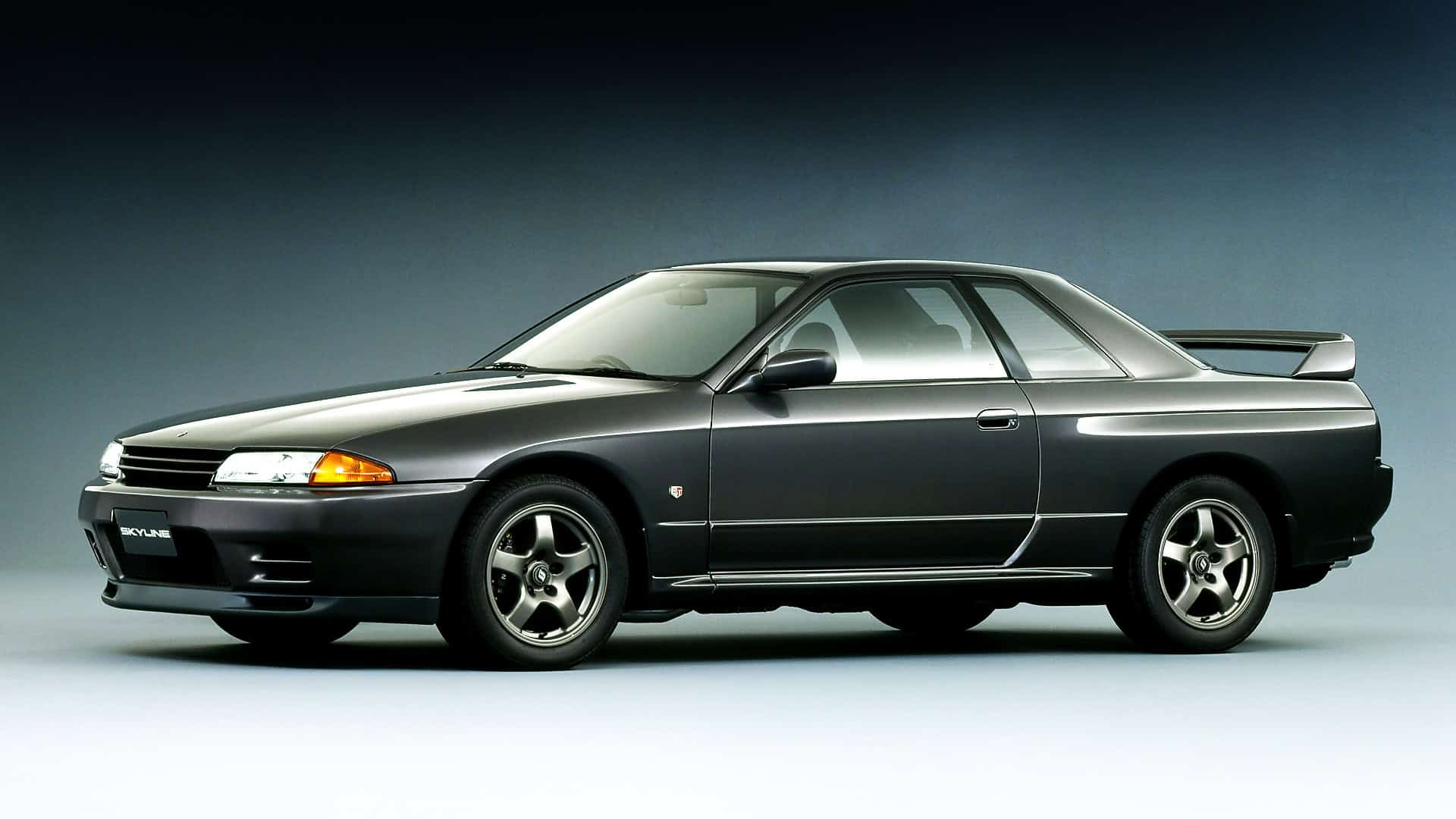
1989 Nissan Skyline GT-R

1989 Nissan Skyline GT-R

1989 Nissan Skyline GT-R 001

After cancelling the Skyline GT-R in 1973, Nissan revived the GT-R again in 1989. At the time Nissan was competing in Group A Racing with the Skyline GTS-R. Nissan wanted to retire the GTS-R in favor of a more competitive vehicle. The new generation GT-R, E-BNR32 chassis (commonly shortened to R32), was designed to dominate Group A racing.

1989 Nissan Skyline GT-R 002

The R32 developed 206 kW / 276 hp and 266 lb-ft (361 Nm) of torque, it had a curb weight of 1,430 kg / 3,146 lbs. Nissan officially started its production run August 1989, and began its Group A campaign in 1990. Due to strict Group A homologation rules, Nissan was required to also sell a series of the Skyline GT-R which more accurately reflected the car they use in Group A racing. This series was called the Skyline GT-R ‘Nismo’ edition.

1989 Nissan Skyline GT-R 003

The Skyline GT-R ‘Nismo’, introduced on February 22, 1990, has a total production of 560 units as required for the “Evolution” models regulation (over 500). Only 500 of the cars were sold to the public, with 60 being held by Nissan to turn into race cars. Its purpose is to homologate a number of aerodynamic changes used in Group A racing.

1989 Nissan Skyline GT-R 004

Changes include additional ducts in the front bumper to improve airflow to the intercooler, a bonnet lip spoiler to direct more air into the engine bay, and an additional boot lip spoiler to provide more downforce. The ‘Nismo’ GT-R was only available in Gunmetal Grey.

1989 Nissan Skyline GT-R 005

Car Specifications

Engine: 2.6L I6 Twin Turbo

Weight: 1,430 kg / 3,152 lbs

Power: 206 kW / 276 hp / 280 PS

0-100 kph: 5.6 seconds

Torque: 361 Nm / 266 lb-ft

Top Speed: 180 kph / 112 mph

Similar Posts

  • 2017 Nissan GT-R Nismo

    The NISMO version of the GT-R gets a minor refresh, with a new bumper design that allows more air flow to cool the engine. Overall the carbon fibre font bumper now produces more down force than ever before and increases stability at high speeds, helping the car to reach 200 mph. The body of the…

  • 2000 Nissan Silvia

    Japan saw a new version of the Silvia (S15) in 1999, now boasting 250 hp (184 kW) from its SR20DET engine, thanks to a ball-bearing turbocharger upgrade, as well as improved engine management. The SR20DE (non-turbo motor) featured 165 hp (121 kW). The S15 Silvia included aggressive styling inside and out, updating the previous Silvia…

  • 2008 Nissan GT-R

    The Nissan GT-R offers ultimate performance for virtually every driving situation – whether it be the Nurburgring circuit, to snow, rain or urban areas – all manageable by the GT-R driver through advanced technology and driving dynamics.  The Nissan GT-R’s unique characteristics are instilled not just in the vehicle’s design, but also through a specialized…

  • 2015 Nissan GT-R Nismo

    Records fall and dreams come true with the debut of the Nissan GT-R Nismo. This race-oriented model delivers “factory tuned” supercar dynamics with revolutionary enhanced aerodynamics and ultra-precise handling. The Nissan GT-R is already established as one of the best performing supercars in the automotive sphere, and now Nissan has drawn on decades of racing…

  • 2005 Nissan GT-R Prototype

    At the 35th Tokyo Motor Show in 2001, Nissan unveiled the GT-R Concept, confirming that the GT-R legend would be continued into the 21st century. Then, at the 37th Tokyo Motor Show in 2003, Nissan announced the next-generation GT-R would be rolled out in 2007. Now with the launch of the production model just two…

  • 2008 Nissan GT-R Black Edition

    From start to finish, each GT-R engine is handcrafted by its own master engine-builder in a climate-controlled “clean room.” Each twin-turbo V6 is precisely assembled from lightweight, highly durable aluminum and magnesium parts. It takes the exacting standards of the plant’s most talented and devoted engine builders to produce the engine that has redefined what…