2001 Toyota Supra 'The Fast and the Furious'

2001 Toyota Supra ‘The Fast and the Furious’
2001 Toyota Supra 'The Fast and the Furious' 001

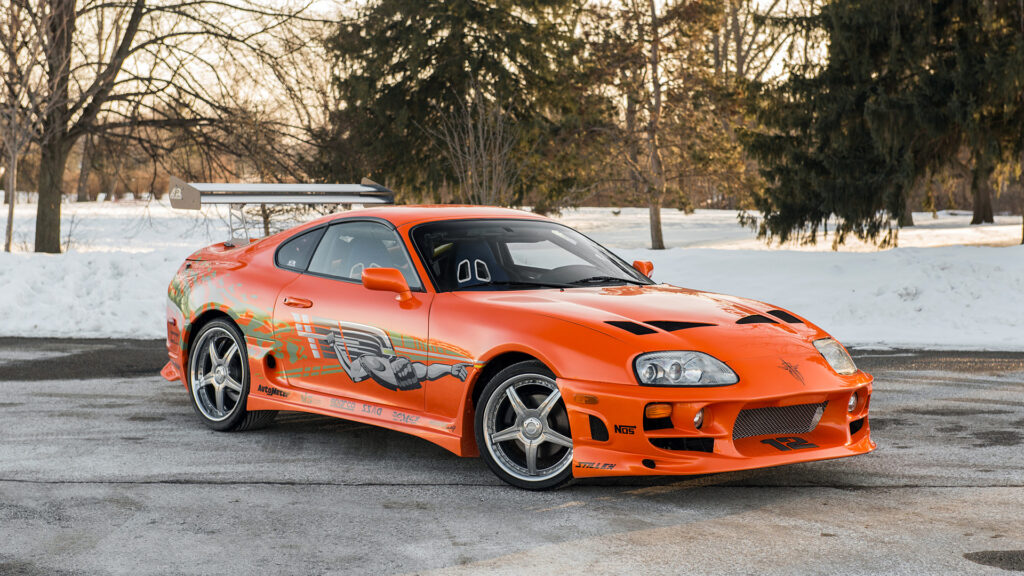
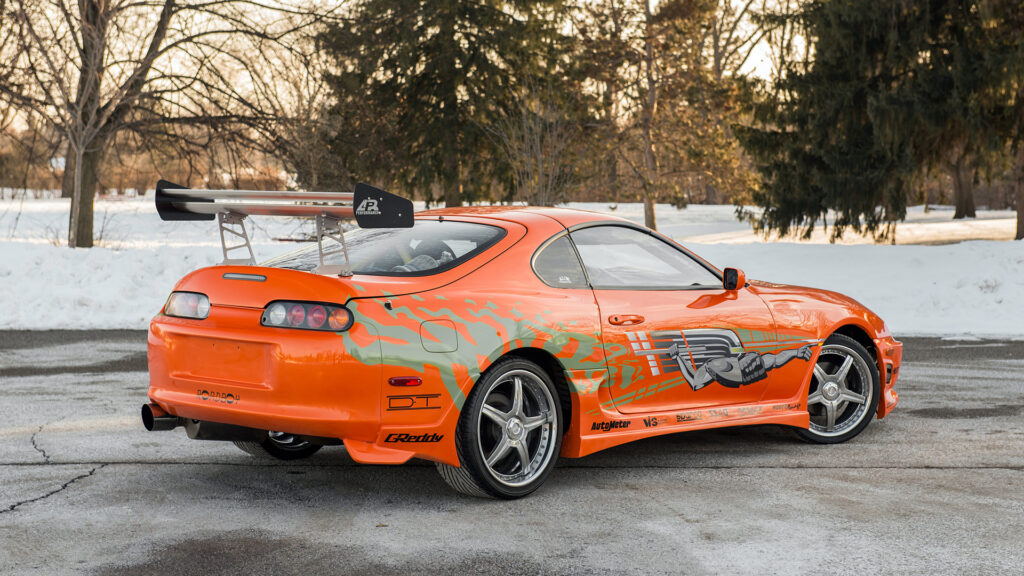
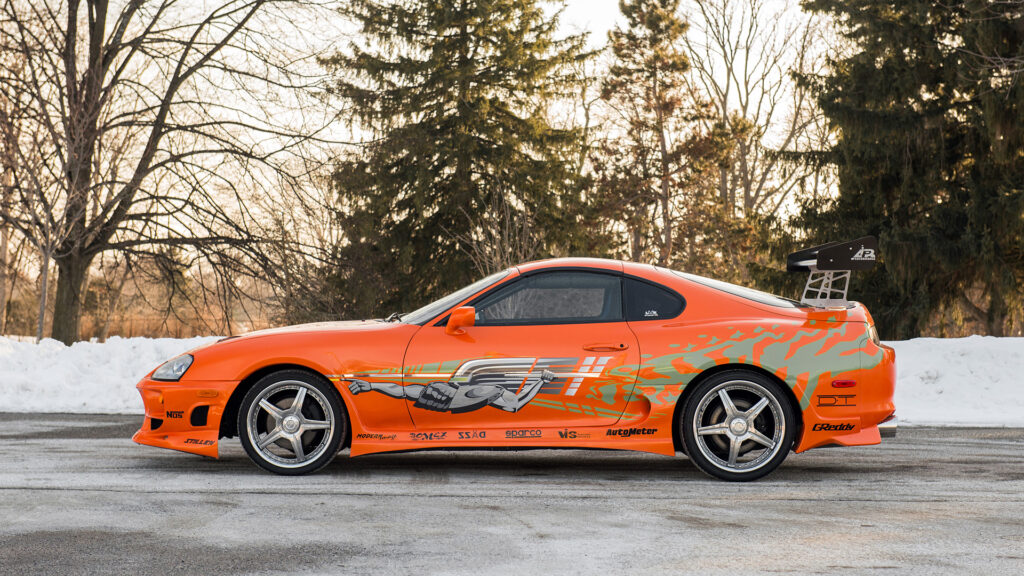
Due to it’s key role in the first Fast and the Furious movie, the Toyota Supra shot up the lists of many teenagers most desired cars. The movie used a MKIV Toyota Supra Turbo with a bright candy pearl orange paint job and custom Troy Lee graphics down the side. The look is instantly recognisable, and stands as one of the most famous cars in film.
2001 Toyota Supra 'The Fast and the Furious' 002

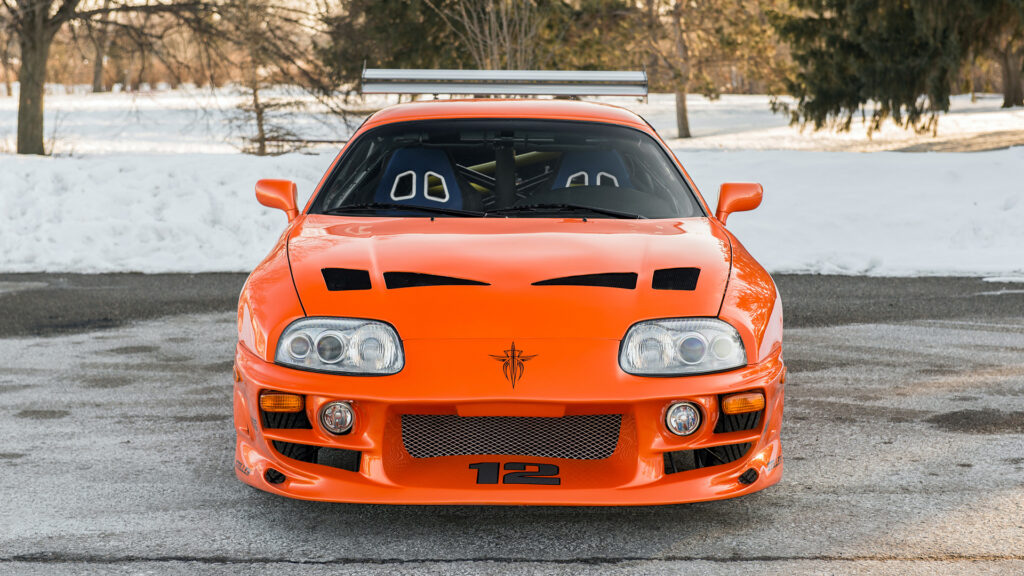
The exterior modifications consist of a Bomex body-kit complete with front bumper, rear valance, side skirts and an aluminum bi-plane rear spoiler. The hood is a TRD composite piece with ventilation, the headlights are xenon based, and the wheels are 19-inch Racing Hart M5 Tuner rims with cross-drilled and slotted Stillen 14-inch rotors and AP Racing six-piston calipers sitting behind.
2001 Toyota Supra 'The Fast and the Furious' 003

With an extensively tuned engine peak power is rated at 544 PS (400 kW) at 6,800 rpm, with another 100 horsepower boost from the wet-shot Nitrous Oxide System.

2001 Toyota Supra 'The Fast and the Furious' 004

The power increases come courtesy of a Turbonetics T-66 ball-bearing turbocharger with Delta II wastegate, Greddy intercooler, exhaust, oil coolers, intake, cam gears and APEXi blow-off valves. The 6-speed manual transmission used a sequential adapter with a Stage III racing clutch.
2001 Toyota Supra 'The Fast and the Furious' 005

Car Specifications

Engine: 3.0L Inline 6 Turbo

Weight: –

Power: 400 kW / 537 hp / 544 PS

0-100 kph: 4.3 seconds

Torque: –

Top Speed: 298 kph / 185 mph

Similar Posts

  • 1989 Toyota Supra Turbo

    The new A70 Supra engine, the Toyota 7M-GE, was the flagship engine of Toyota’s arsenal. Both versions of the engine contained 4 valves per cylinder and dual overhead cams. The turbocharged 7M-GTE engine was Toyota’s first distributor-less engine offered in the US which used coil packs sitting on the cam covers and a cam position…

  • 1997 Toyota Supra

    Supra is powered by a high-performance, twin-cam, in-line six-cylinder, 24-valve, electronically fuel-injected engine. In normally aspirated trim, it produces 220 horsepower at 5,800 rpm and a maximum of 210 lb-ft of torque at 4,800 rpm. In addition to a specially tuned intake system, it incorporates split-exhaust manifolds for reduced engine back pressure, enhanced power output…

  • 1993 Toyota Supra

    With performance equal or superior to many of the world’s most exotic sports cars, it would have been easy for Toyota engineers to forget that Supra is still a Toyota at heart. But because it is a Toyota, they were able to incorporate speed, style, quality, dependability and Toyota’s legendary reliability. Supra is equipped with…

  • 2020 Toyota Supra

    After many years of the Supra nameplate going missing, Toyota have finally brought back their famous sports car. Like many expected, the 2020 Toyota Supra takes it’s form from the Toyota FT-1 concept car from 2014, a striking look which mostly remains intact for the new Supra. Whilst it may share most of its underpinnings…

  • 1987 Toyota Supra

    In May 1986, Toyota was ready to release its next version of the Supra. The bonds between the Celica and the Supra were cut; they were now two completely different models. The Celica changed to front-wheel drive, utilizing the Toyota “T” platform associated with the Toyota Corona, while the Supra kept its rear-wheel-drive platform. The…